
What Happens During a Somatic Breathwork Session?
A Gentle Guide to Your First Experience With Somatic Breathwork at Serenity Cove
If you've been curious about Somatic Release Breathwork, you're not alone.
One of the questions I hear most often is:
"What actually happens during a breathwork session?"
It's a wonderful question because, for many people, trying something new—especially something that involves the body and emotions—can feel both exciting and a little intimidating.
As a Registered Nurse with more than twenty years in emergency and critical care, I've learned that people feel safest when they understand what's happening. My work today combines that clinical foundation with trauma-informed breathwork, nervous system education, and compassionate healing practices.
My hope is that by the time you finish reading this, you'll have a clear understanding of what to expect and feel more at ease if you decide this experience is right for you.
What Is Somatic Release Breathwork?
Somatic Release Breathwork is a guided breathing practice designed to support nervous system regulation, emotional processing, and a deeper connection with yourself.
Rather than trying to "fix" you, breathwork creates the conditions for your body to do what it naturally knows how to do—release tension, restore balance, and reconnect with a sense of safety.
Every person's experience is different.
Some people leave feeling peaceful.
Others feel energized.
Some experience emotional release.
Others simply enjoy one of the deepest states of relaxation they've experienced in years.
There is no "right" experience.
Before We Begin
When you arrive at Serenity Cove, you'll never be rushed into the breathwork itself.
Instead, we'll spend time settling in.
You'll have an opportunity to ask questions, share what brought you here, and become familiar with the space.
Safety begins long before the breathing starts.
We'll also review any medical considerations to ensure the experience is appropriate for you.
What Happens During the Session?
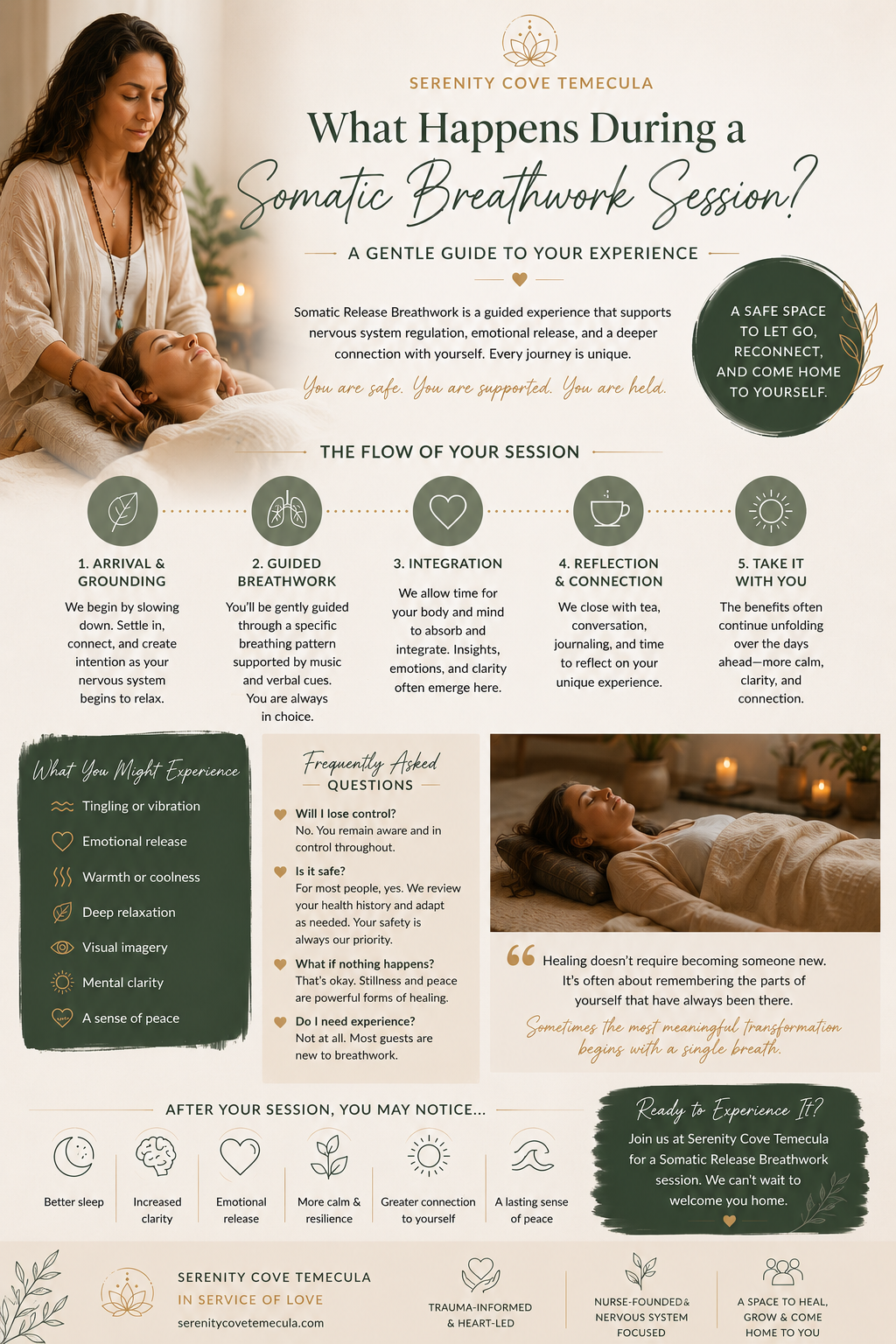
A typical Somatic Release Breathwork session lasts approximately two hours and includes several phases.
Arrival & Grounding
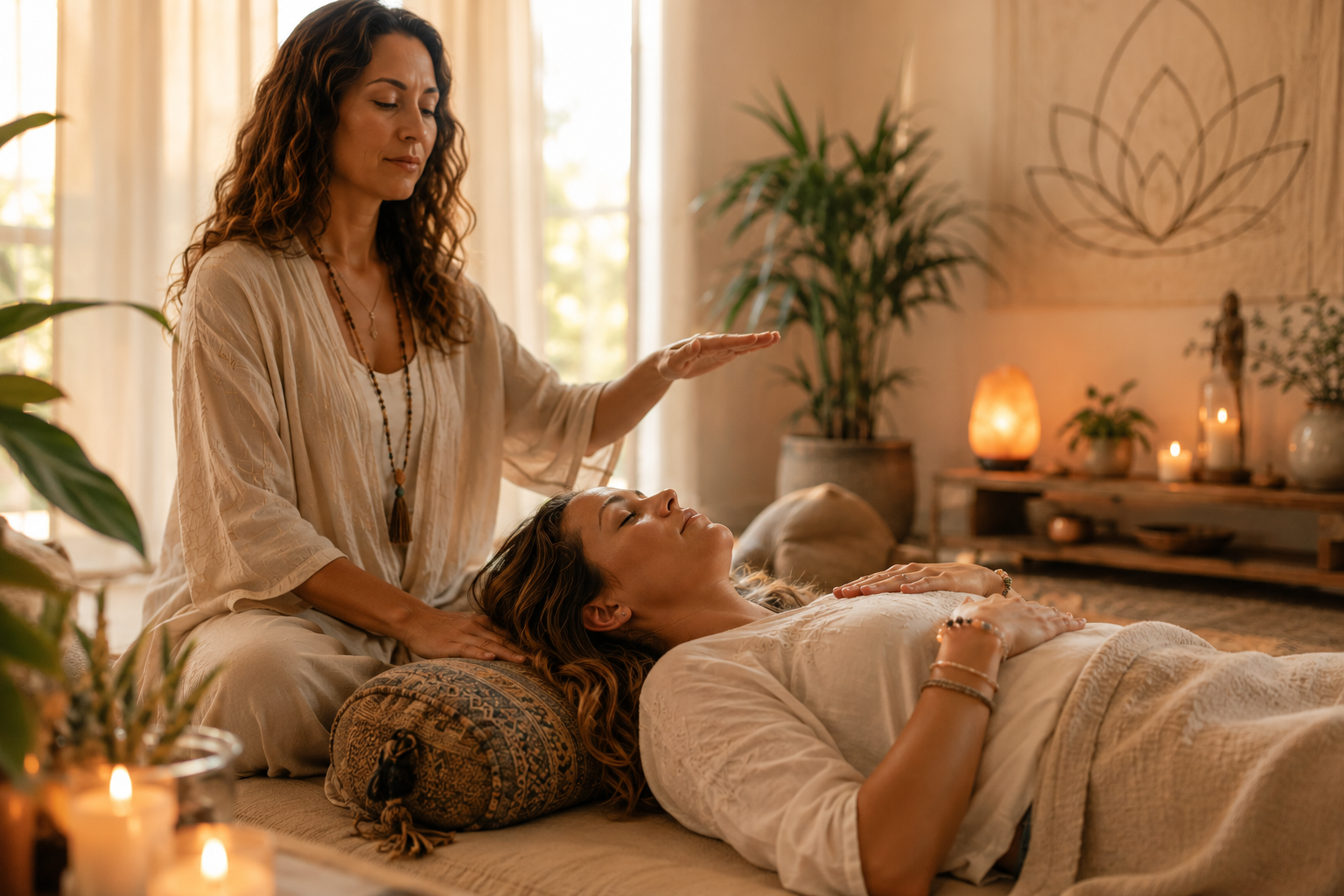
We begin by slowing down.
Through gentle conversation, meditation, and intention setting, your nervous system begins transitioning away from the busyness of everyday life.
This often becomes one of people's favorite parts of the experience.
Simply having permission to pause.
Guided Breathwork
Once you're comfortable, I'll guide you through a specific breathing pattern supported by carefully selected music and verbal cues.
You are never expected to "perform."
You simply breathe, listen, and notice.
Throughout the session, you remain supported, encouraged, and free to adjust your experience at any time.
Integration
When the active breathing concludes, we spend time allowing your nervous system to settle.
This quiet period is incredibly important.
Many people notice clarity, insight, gratitude, or simply a deep sense of calm emerging here.
Afterward, we gently process the experience together over tea, conversation, or journaling.
Will I Lose Control?
This is one of the most common questions I receive.
The answer is no.
Most participants remain aware of where they are throughout the experience.
You always have choice.
You can slow your breathing, pause, ask questions, or stop at any point.
My role isn't to push you.
It's to create a safe environment where your nervous system can unfold at its own pace.
Why Do People Cry During Breathwork?
Sometimes people cry.
Sometimes they laugh.
Sometimes they experience profound stillness.
Sometimes nothing dramatic happens at all.
Emotional release is not the goal of breathwork.
Rather, it can be one way the nervous system naturally lets go of stored stress or emotion.
Many participants describe it as finally allowing themselves to feel something they've been carrying for a long time.
Others simply experience peace.
Every response is welcome.
What Might I Feel?
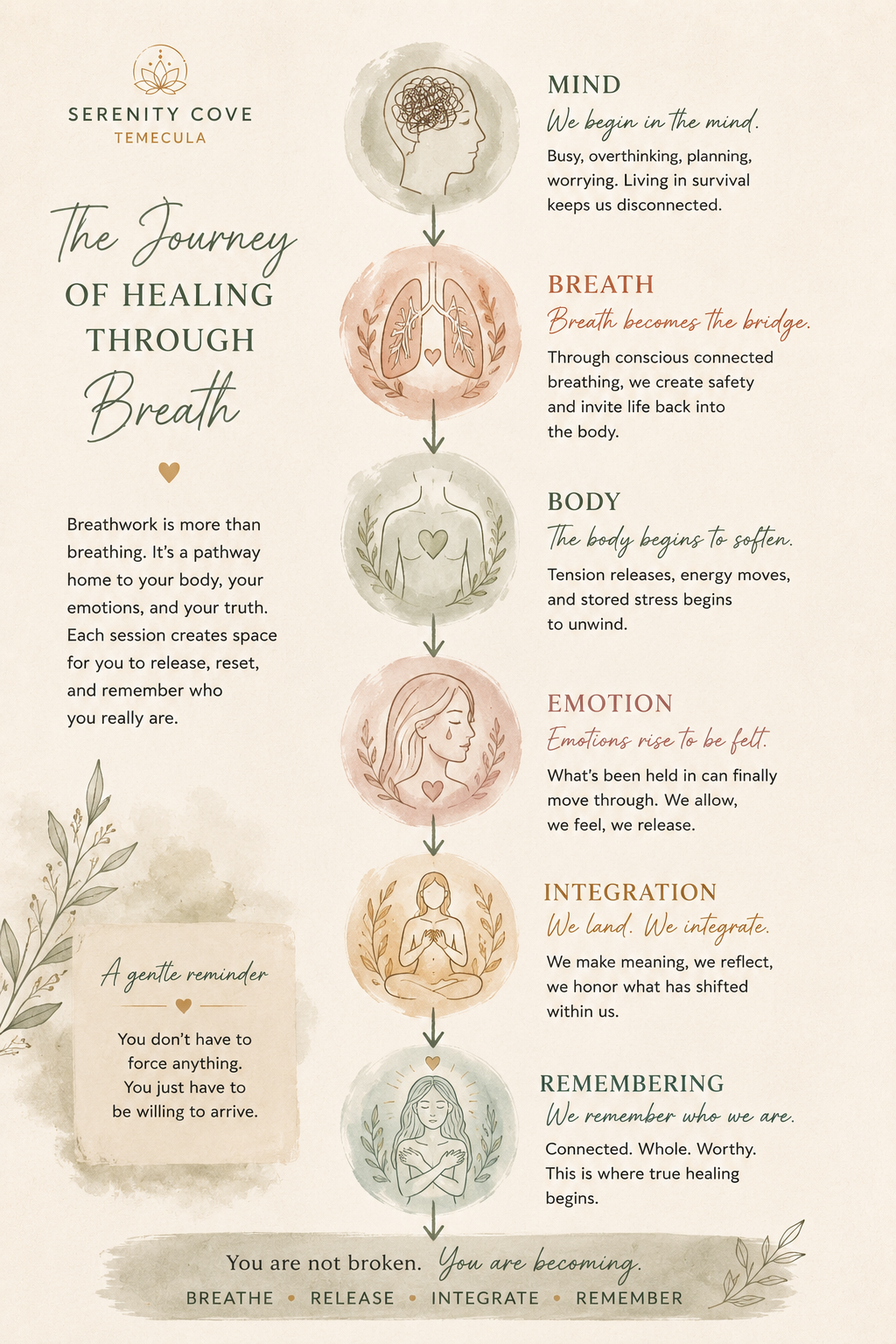
Everyone's experience is unique, but common sensations include:
Tingling in the hands, feet, or face
Warmth or coolness throughout the body
A feeling of lightness
Emotional release
Deep relaxation
Increased mental clarity
Visual imagery
A profound sense of presence
You may experience several of these—or none of them.
Neither experience is better than the other.
What If Nothing Happens?
This may be my favorite question.
Sometimes people expect fireworks.
Instead, they experience stillness.
Sometimes they leave saying,
"I just felt peaceful."
That is not "nothing."
For many people, peace is something they haven't experienced in years.
Healing doesn't always arrive dramatically.
Sometimes it whispers.
Is Breathwork Safe?
For most healthy individuals, breathwork can be a deeply supportive practice.
However, certain medical conditions may require modifications or may make breathwork inappropriate.
Before every session, we carefully review your health history and discuss any concerns together.
As a trauma-informed facilitator and Registered Nurse, creating physical and emotional safety is always my highest priority.
If breathwork isn't the right fit, I'll happily help guide you toward another experience that better supports your needs.
What Happens Afterward?
Many people notice benefits that continue unfolding over the following days.
You may experience:
Better sleep
Increased emotional awareness
Greater calm
Unexpected clarity
Creative insights
A stronger sense of connection with yourself
Others simply notice they feel more present.
Whatever arises, we encourage approaching it with curiosity rather than judgment.
Healing often continues long after the session ends.
Is Somatic Release Breathwork Right for You?
People come to Serenity Cove for many different reasons.
Some are navigating stress or burnout.
Some are moving through grief.
Some simply recognize they've spent years taking care of everyone else and are finally ready to care for themselves.
You don't need to have everything figured out before you arrive.
You simply need a willingness to show up with curiosity.
We'll meet you exactly where you are.
Frequently Asked Questions
Do I need experience?
Not at all. Most guests are experiencing breathwork for the first time.
What should I wear?
Comfortable clothing that allows you to breathe and relax easily.
Should I eat beforehand?
A light meal one to two hours beforehand is usually best.
Will I remember the experience?
Yes. Most people remain aware throughout the session.
Can I come with a friend?
Absolutely. Many guests enjoy sharing the experience with someone they trust, while others prefer a private one-on-one session.
A Personal Invitation
Healing doesn't require becoming someone new.
More often, it's about remembering the parts of yourself that have always been there beneath the stress, the responsibilities, and the constant noise of everyday life.
If you're feeling curious, I'd be honored to welcome you to Serenity Cove.
Whether this is your very first breathwork experience or one step along a much longer journey, we'll create a space where you can slow down, reconnect, and simply be.
Sometimes the most meaningful transformation begins with a single breath.
Continue Exploring
Is Breathwork Safe? What You Should Know Before Your First Session
Why Do People Cry During Breathwork?
What Is Nervous System Regulation?
Breathwork vs. Meditation: What's the Difference?
Curious about experiencing Somatic Release Breathwork? Explore upcoming sessions and private experiences at Serenity Cove.
